- Know your demographics: Don't just know the numbers of who you are serving but know who they are. What do they do in their free time? Who do they hang out with? What TV shows do they watch? Become a fan of them and they will become a fan of you.
- Be where the teens are: This is not literal. I don't want you to follow them around. I mean if they are already using a certain technology, be there for them to find. Don't try to create something and try to make join. Go to them.
- Reading is not just books: I love the printed and bound word just as much as the next librarian but that doesn't mean it is the only way to read. Open up your mind to all the different ways that teens absorb information.
- Give them what they want: Don't imagine that we know what is best for teens to be reading or doing. That is not our job. Instead, give them what they want to read and want to do and be there to help when you can. Teens need a place where they won't be judged and the library can be that place.
- Listen to the teen voice: If you can't hear what teens want...ask them! Get a group together who you can run ideas by, who can give you ideas. They will be invaluable. And the best part is that when they contribute to the library they get a feeling of ownership which means that they will take care of the library and keep coming back again and again.
What I Learned
Here are the 5 things I took away from the 2008 YA Literature Symposium in Nashville, TN
Hit List or Hot List: How Teens Read Now
RoseMary Chance and Teri Lenense, Professors of Library Science at Sam Houston State University interviewed authors Barry Lyga, Julie Anne Peters, and Coe Booth about what it is like to write controversial fiction for teens.
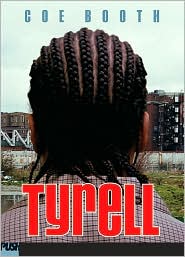
 Coe Booth author of Tyrel and Kendra writes for the teens she knows. She doesn't shy away from stories with swear words, sex, drugs, gangs or violence. She knows that teens encounter those topics on a daily basis. To not write about them would be an injustice for her readers.
 Julie Anne Peters has been both praised and banned for her controversial books about gay teens. While parents and teachers judge her for the issues that she brings up she is always receiving letters from grateful teens who appreciate the delicate topics that she talks about in her books. The teens she writes for are hurt and looking for someone to look up to and Peters is a great person to find.
 Barry Lyga is an author who's work is quietly controversial. When you start reading his books you aren't sure if some people will find them offensive but when you uncover the themes beneath the story you begin to realize what he is truly writing about. His books about misfits and the misunderstood are insightful about the life of the not-so-perfect and the not-so-popular.
Out of all of this there are two things that I took away:
 Coe Booth author of Tyrel and Kendra writes for the teens she knows. She doesn't shy away from stories with swear words, sex, drugs, gangs or violence. She knows that teens encounter those topics on a daily basis. To not write about them would be an injustice for her readers.
 Julie Anne Peters has been both praised and banned for her controversial books about gay teens. While parents and teachers judge her for the issues that she brings up she is always receiving letters from grateful teens who appreciate the delicate topics that she talks about in her books. The teens she writes for are hurt and looking for someone to look up to and Peters is a great person to find.
 Barry Lyga is an author who's work is quietly controversial. When you start reading his books you aren't sure if some people will find them offensive but when you uncover the themes beneath the story you begin to realize what he is truly writing about. His books about misfits and the misunderstood are insightful about the life of the not-so-perfect and the not-so-popular.
Out of all of this there are two things that I took away:
- The best place for controversial books is in the classroom where they can be discussed under a teachers guidance. Books are taken off the shelves because teachers or librarians or parents or anyone find something offensive about them and they don't think children should be reading them. But that is the exact opposite of what we should do. Teens will find a way to get to the books the want/need. The best we can do is offer them a place to understand what is happening in the book and express how it makes them feel.
- There are two types of censorship; banning a book and removing it from a collection or classroom, and "selection" or not keeping the books on your shelf because it is controversial. Make sure that you aren't doing either of these forms of censorship.
Zine-a-paloosa 2008: Teens and Zines!
Julie Bartel from the Judge Memorial Catholic High School spoke about the large zine collection that she has developed at her library. Bartel had been an avid zine collector before she started buying them for the library. She describes each one as a piece of art, created by the artist to evoke feelings in the reader not just through the writing but thought the design of the zine itself.
Zines have been popular with teens for a long time. They offer that feeling of individuality and originality to teen creators. However, building and maintaining a zine collection is no easy matter. Each zine subscription must be managed manually. Fees must be sent to each author for each edition and no two fees are alike. There are some zine management companies that will help you get in touch with authors but for the most parts this is a grassroots collection.
Zines fit in perfectly with the earlier discussion of the participatory culture of fandom. They are just another example of teens creating materials and the Library can participate by distributing those materials and holding zine workshops.
Zines have been popular with teens for a long time. They offer that feeling of individuality and originality to teen creators. However, building and maintaining a zine collection is no easy matter. Each zine subscription must be managed manually. Fees must be sent to each author for each edition and no two fees are alike. There are some zine management companies that will help you get in touch with authors but for the most parts this is a grassroots collection.
Zines fit in perfectly with the earlier discussion of the participatory culture of fandom. They are just another example of teens creating materials and the Library can participate by distributing those materials and holding zine workshops.
Just Keepin' It Real: Teens Reading Out of the Mainstream
This session by Rollie Welch from the Cleavland Public Library is another one that I did not attend but notes are provided by Mary Olive Thompson of the Kansas City Public Library.
Reading Tastes of Inner City Teens
Urban Libraries serve populations that include large numbers of at-risk or disenfranchised teens.What do teens want?
- poor
- huge high school drop out rates
- high teen pregnancy rates
- high frequency of violent crimes
Street Lit and Teens
- to read about someone who looks like them
- someone who experiences the same situations
- action over lengthy descriptions
- plot over character
- fast paced
- easy to read and complete
- better alive than dead
- the mystery of manga
- adults don’t get it, teens do
- it’s real and relevant to their life experiences
- everyone wants to read them, friends pass books around in their circle
- mothers passes to daughter, or vice versa
- stories are linked to inner city streets
- teens can relate in some way, mother, aunt, friend
- crime, violence, and sex
- modern morality tales
- some are better than others
- inexpensive and short life condition
- reoccurring themes throughout
- loyalty, friendships from teen years, betrayal
- Street lit- gateway to other reads
- titles geared toward women or men
Fandom, Fan Life, and Participatory Culture
Liz Burns, from the New Jersey State Library and Carlie Webber, from the Bergen County Cooperative Library System, spoke about teen fandom that has been around for decades but has been brought into the limelight by fanatical Twi-hards (Twilight fans). For teens today reading is no longer a solitary activity. If you have ever had a Harry Potter or Twilight event at your library you understand that being a fan of a book or a TV show means more than just enjoying the story, it means immersing yourself in the culture.
 Fandom as a culture includes fanfiction, fanart, cosplay and more. If you are not familiar with these terms here is a short definition:
Here are some ways that you can encourage a teen fan culture in your library.
 Fandom as a culture includes fanfiction, fanart, cosplay and more. If you are not familiar with these terms here is a short definition:
- fanfiction: fiction written by fans using the characters of the original work.
- fanart: art based on the original work.
- cosplay: fans dressing up as characters from a book, movie or TV show.
Here are some ways that you can encourage a teen fan culture in your library.
- Book release parties
- Cosplay design contests
- Fanfiction writing workshops
- Fanart displays
- Anime clubs
Reading: It's Not Just About Books Anymore
Linda Braun gave a fascinating presentation about what reading is in the 21st century and how it has been changed, and augmented by technology. It always surprises me when I meet a teen who tells me they are not a reader. I ask them "do you text with your friends?" Yes. "Do you follow any blogs?" Yes. "Do you listen to any podcasts?" Yes. "Do you post to Facebook or MySpace?" Yes. "Then you're a reader!"
Too long librarians have been tied up in the idea of the book as the only way to "read." There have been other forms of reading around for centuries and now it is expanding to the Internet. How far does your idea of reading reach? Braun argued that books, magazines, newspapers, ebooks, audiobooks, blogs and text messages are all reading. Technology hasn't just opened up new forms of reading and communicating information and narrative but it has allowed readers to interact with their literature in a way they never could before
Here are some of the resources that Linda Braun shared:
Too long librarians have been tied up in the idea of the book as the only way to "read." There have been other forms of reading around for centuries and now it is expanding to the Internet. How far does your idea of reading reach? Braun argued that books, magazines, newspapers, ebooks, audiobooks, blogs and text messages are all reading. Technology hasn't just opened up new forms of reading and communicating information and narrative but it has allowed readers to interact with their literature in a way they never could before
Here are some of the resources that Linda Braun shared:
- Twitter: a microblogging web application that allows users to "tweet" messages of 140 characters or less to each other or to an entire community. One of the more interesting Twitter projects called Many Voices where any one on Twitter could contribute 140 characters to a continuing story.
- Tumblr: a cross between blogging and micro blogging it is meant for short blog posts and links to pictures or video. It also allows link sharing and doesn't limit you to 140 characters.
- Wordia: a new video dictionary that allows users to make and submit videos describing words.
- Voice Thread: Record your presentations, both video and audio and make them available online.
Books Between Cultures
This session by Mitali Perkins, was not one that I attended personally but here are notes from Mary Olive Thompson of the Kansas City Public Library.
Many teens have to navigate two cultural worlds, the mainstream and the world at home. As librarians, we need to evaluate our collection to determine if the stories empower or alienate the teens we serve.
Six Stereotypes of Non-whites:Five Challenging Questions when Evaluating Books for Young Adults
- Nobel Savage (seen as wiser than others or a magical prophet)
- Exotic Stranger (more desirable or sexualize)
- Token Side Kick (never a hero)
- Accent Alien (heroes of “other cultures” that sound like Americans heroes but don’t have accent)
- Underclassman (uneducated, poor, downtrodden)
- The “Not it” (rejected, unattractive, counter to the exotic stranger)
- Are non-white character’s one-dimensional? Teens need to see themselves in all kinds of stories, not just stories about race
- Are characters exoticized in anyway?Is it needed for the story? Keep an eye out for generic vs. detailed cultural info Detailed, specific culture is better
- Who are the people in the story with the power to change things? Are they mainstream white people?
- Does the storyteller use accent as a short cut for characterization?
- How is beauty described? How is race described? Why is race described? Food metaphors are lazy Question the illustration and cover art- who’s on the cover? Why?
Thrilling Young Adults: How to Keep the Attention of Today's Teens
Amy Alessio, Margaret Haddix, Patric Jones and Deborah Noyes Wayshak spoke about writing attention grabbing books for teens. Teens can be a very selective audience and make writing a challenge. But it seems that most authors write for themselves or teens that they know to find out what they want to read.
 Some authors like Margaret Haddix and Deborah Noyes Wayshak write what they would have wanted to read when they were teens. Looking back to what you read or wanted to read but never found is good way to get in touch with your audience. Haddix also has the advantage of teenage children in her home, even if they aren't as amorous of her work as other teens.
Librarians can use this tool as well. The best books are ones that can span generations. Think about the books that you loved to read when you were a teenager. What was it that drew you to them? Was it the plot, the characters, the action? Think about new ways to spin the story and sell it to a new generation of teens.
 Patrick Jones writes his books in a different way, with teen reviewers. To make sure that his books are going to speak to teens, Jones actually gives galleys of books to select teens to review and give him editorial comments. He expects a lot out of his reviewers and gets a lot of loyalty in return. Many libraries use a similar Teen Advisory Board to help with collection development, teen space design and program ideas. Jones has just taken this idea one step further and applied to the books themselves. This is what gives his books such accessibility to teens today.
Amy Alessio facilitated the discussion and talked about the impact of thrilling books in her library, the Schaumburg Township District Library in Illinois, where she also uses teens to help her. Getting the attention of teens is not an easy task for writers or librarians. It requires being current and relevant to their lives. Libraries, and books have to be dynamic to hold their attention and keep them coming back again and again. Sometimes, it is about finding the perfect book or author or finding that place in the library where they feel they can belong.
 Some authors like Margaret Haddix and Deborah Noyes Wayshak write what they would have wanted to read when they were teens. Looking back to what you read or wanted to read but never found is good way to get in touch with your audience. Haddix also has the advantage of teenage children in her home, even if they aren't as amorous of her work as other teens.
Librarians can use this tool as well. The best books are ones that can span generations. Think about the books that you loved to read when you were a teenager. What was it that drew you to them? Was it the plot, the characters, the action? Think about new ways to spin the story and sell it to a new generation of teens.
 Patrick Jones writes his books in a different way, with teen reviewers. To make sure that his books are going to speak to teens, Jones actually gives galleys of books to select teens to review and give him editorial comments. He expects a lot out of his reviewers and gets a lot of loyalty in return. Many libraries use a similar Teen Advisory Board to help with collection development, teen space design and program ideas. Jones has just taken this idea one step further and applied to the books themselves. This is what gives his books such accessibility to teens today.
Amy Alessio facilitated the discussion and talked about the impact of thrilling books in her library, the Schaumburg Township District Library in Illinois, where she also uses teens to help her. Getting the attention of teens is not an easy task for writers or librarians. It requires being current and relevant to their lives. Libraries, and books have to be dynamic to hold their attention and keep them coming back again and again. Sometimes, it is about finding the perfect book or author or finding that place in the library where they feel they can belong.
Subscribe to:
Posts (Atom)